Ad · This article contains affiliate links.
In a small rented kitchen, counter space is precious, and a big coffee machine can eat half of it. You don’t need one. Some of the best coffee comes from simple brewers that fit in a cupboard. Here’s how to choose.
Start with how you drink it
One strong cup, fast: a moka pot or an AeroPress.
Two or three cups at once: a cafetière (French press) or a pour-over with a jug.
Milky coffee: a moka pot plus a small handheld milk frother gets you close to a latte without a machine.
The four simple options
Moka pot: a stovetop pot that makes strong, rich coffee. Small, cheap and it lasts for years. Check that it works on your hob, because classic aluminium pots don’t work on induction.
AeroPress: a plastic plunger brewer that makes one clean, smooth cup in a couple of minutes. Very forgiving, easy to clean and tiny enough to live in a drawer.
Cafetière: coarse coffee steeped in hot water, then pressed. Full-bodied and simple, and it makes several cups at once. A glass one looks nice, and a double-walled steel one keeps the coffee hot longer.
Pour-over: a cone with a paper filter over a cup or a jug. Makes bright, clean coffee and looks beautiful on an open shelf. It takes a little more practice and works best with a gooseneck kettle.
If you’re not sure where to start, these are four simple brewers that each do one job well:
Bialetti
Moka Express Stovetop Coffee Maker, 3 Cup
The classic aluminium moka pot. Strong coffee for one or two, and small enough to live on the hob. Not for induction.
AeroPress
Go Portable Coffee Maker Kit
One smooth cup in a couple of minutes. The whole kit packs inside its own mug, so it fits in a drawer.
Bodum
KENYA French Press, 1L / 8 Cup
A simple glass cafetière for several cups at once, with a steel filter. Easy to clean and cheap to replace.
Hario
V60 Ceramic Coffee Dripper
A white ceramic pour-over cone for bright, clean coffee. Looks lovely on an open shelf.
Keep it to one spot
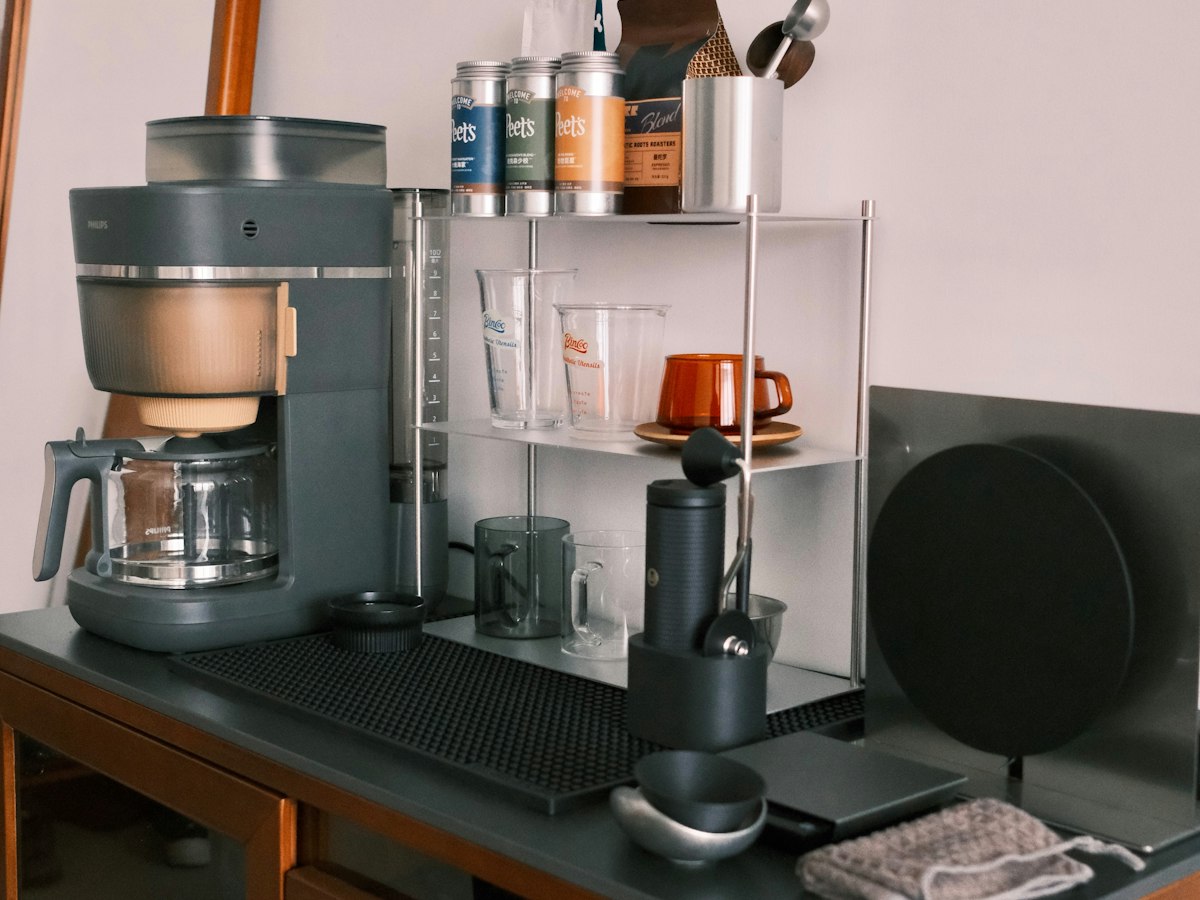
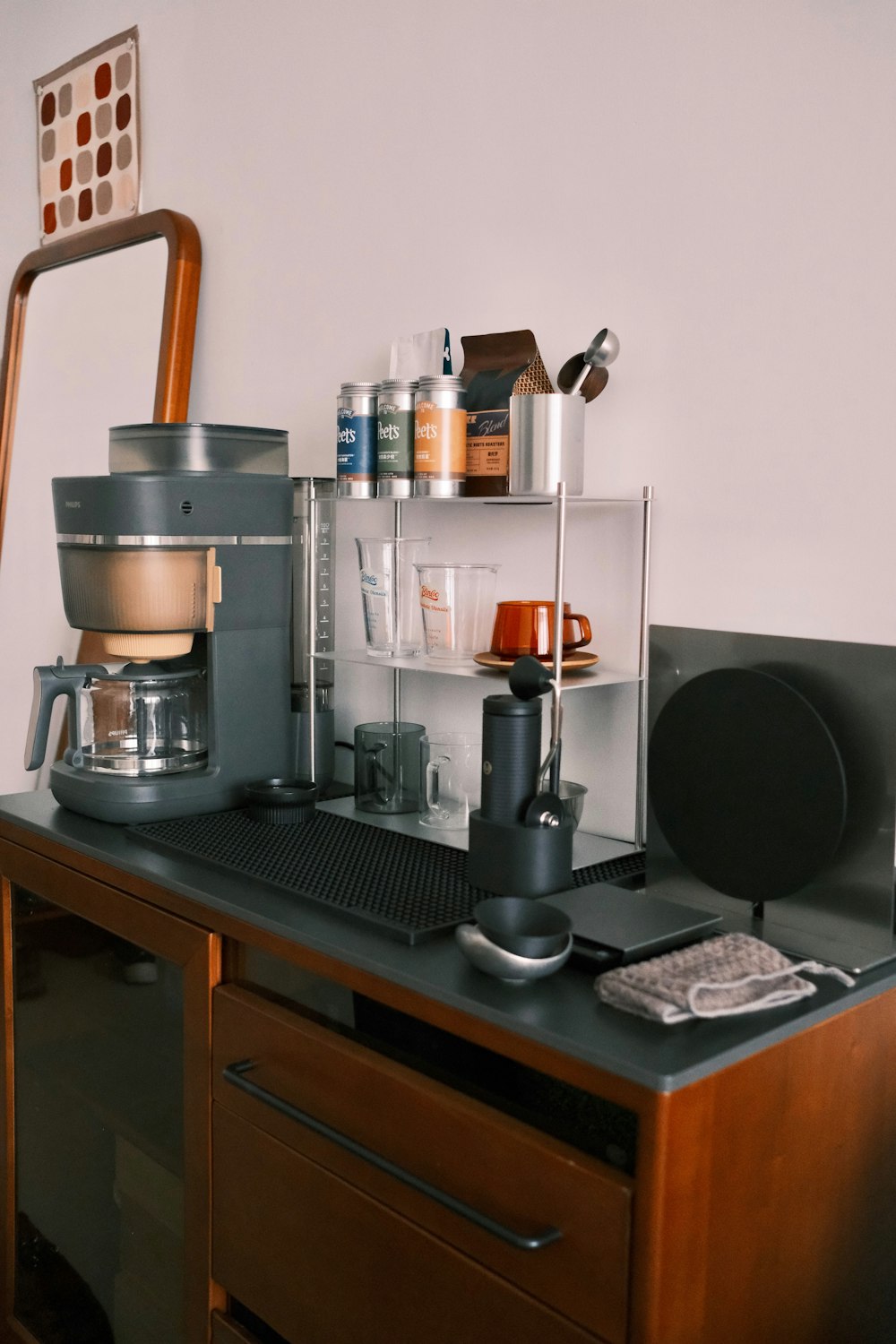
Choose one corner of the counter or a small shelf for everything: brewer, coffee, mugs and a spoon. A wooden tray keeps it looking tidy and makes it easy to lift the whole setup when you need the space. Keep beans or ground coffee in an airtight tin away from the hob, not in the fridge.
The grinder question
Freshly ground coffee tastes noticeably better, but it’s the second step, not the first. When you’re ready, a hand burr grinder is small, quiet and consistent. Blade grinders are cheaper but grind unevenly.
Hario
Mini Mill Plus Hand Coffee Grinder
A slim hand grinder with ceramic burrs and adjustable settings. Small, quiet and fits in a cupboard.
Water and kettle
If you live in a hard water area, which is much of southern and eastern England, a filter jug helps both the taste and your kettle. Let boiled water sit for about 30 seconds before pouring, so it’s just off the boil.
Make it part of the room
A coffee corner can look good, not just work well. Wood, glass and matte ceramic mugs in cream or stone look calm and Scandinavian. Put a small lamp nearby for dark mornings. A warm light makes the first coffee of the day feel very different from the glare of a kitchen strip light.
What I’d skip
A big bean-to-cup machine in a rental kitchen. They’re heavy, take up a lot of counter, need regular descaling and are a pain to move. Start small and see how you actually drink your coffee first.
Frequently asked questions
- Do I need a grinder?
- Not to start. Pre-ground coffee is fine for a cafetière or a moka pot. A grinder makes the biggest difference once you want to improve, and a hand grinder takes very little space.
- Are pod machines worth it in a small kitchen?
- They're compact and quick, but the pods cost more per cup over time and create more waste. If you drink one or two cups a day, a manual brewer is usually cheaper within a few months.
Keep reading
Ad — this article contains affiliate links. If you buy through them I earn a commission at no extra cost to you. More about affiliate links