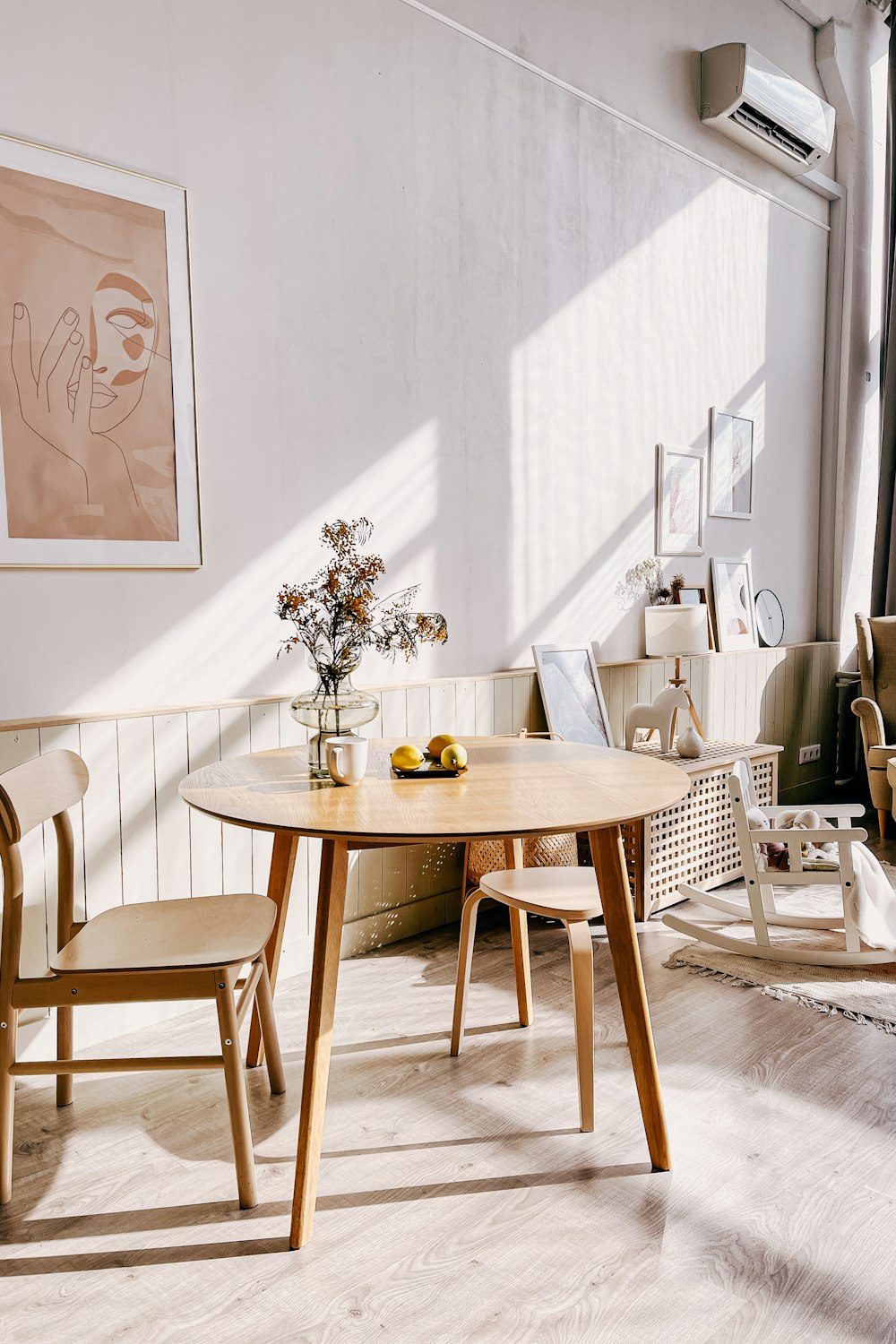
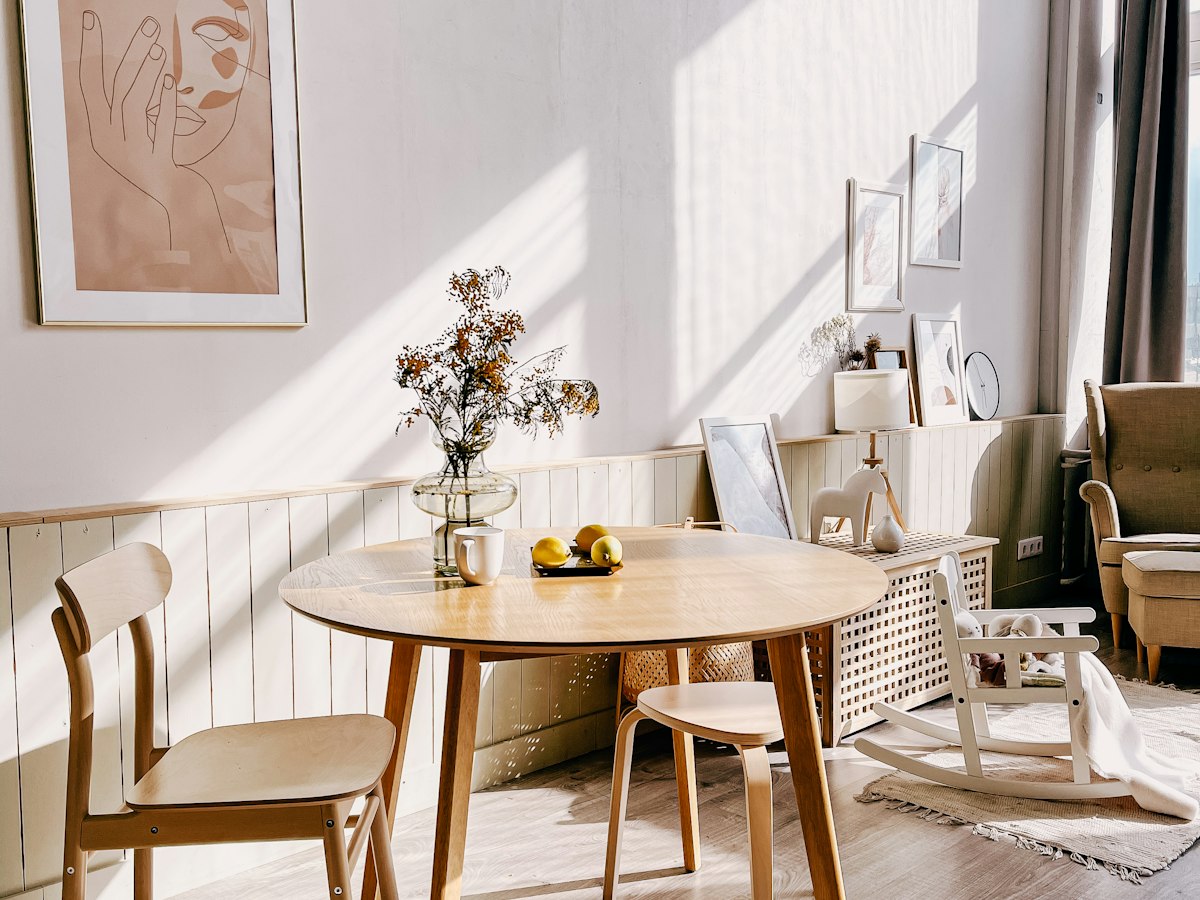
A dining table for a small flat has to earn its keep in a way a full-size dining set doesn’t — either folding away to almost nothing between uses, or having a shape efficient enough to seat two to four without eating the whole room. If the table sits near a kitchen counter you’re also setting up, the coffee setup guide covers the counter-footprint side of that same small space. The picks below cover both table approaches, with the actual clearance measurements that decide whether either one fits your room.
Most flexible: INGATORP Drop-Leaf Table
IKEA
INGATORP Drop-Leaf Table
Folds down to a narrow console against a wall and opens out to seat four, which no fixed-size table can match in the same footprint.
£150–200
Check price at IKEA (link coming soon)
Folded down with both leaves dropped, this sits against a wall barely deeper than a console table — genuinely out of the way on an ordinary evening. Extended fully it seats four, which covers most small households’ occasional-guest scenario without needing a table that size taking up floor space every single day. The trade-off is a slightly less sturdy feel at full extension than a fixed-size table of the same seating capacity, since the leaf hinges are doing structural work a solid top doesn’t need to.
Best everyday shape: LISABO Round Table
IKEA
LISABO Round Table
A round top has no corners to bump past in a tight room, and seats three comfortably where a square table of the same footprint only seats two.
£120–160
Check price at IKEA (link coming soon)
Round tables use floor space more efficiently than square or rectangular ones at a small scale — no wasted corner where a seat can’t comfortably go, and nothing to catch a hip on walking past in a tight room. It’s a fixed size rather than foldable, so it only suits a room with permanent space for it, unlike the drop-leaf pick above.
Best daily-use chairs: JANINGE Stacking Chairs, Set of 2
IKEA
JANINGE Stacking Chairs, Set of 2
Stacks fully when not in use, freeing the floor space four separate chairs would otherwise hold permanently.
£40–60
Check price at IKEA (link coming soon)
For chairs used daily, stacking beats folding on speed — no unfolding mechanism, just pull one off the stack and sit down. Two stacked chairs in a corner take up a fraction of the floor space four permanently-placed chairs would, which matters as much as the table choice itself in a small room.
Best for occasional guests: Folding Dining Chairs, Set of 2
Argos Home
Folding Dining Chairs, Set of 2
Flat-folds for storage in a cupboard between uses, which suits a table that only needs full seating for occasional guests.
£30–45
Check price at Argos (link coming soon)
If two seats cover daily use and you only need four for guests occasionally, a pair of folding chairs stored flat in a cupboard is more space-efficient day to day than a third and fourth stacking chair taking up permanent corner space. The trade-off is a genuine unfold-and-set-up step each time, which is a fair swap for how rarely they’d be needed if guests are occasional.
What this guide doesn’t recommend
This guide doesn’t recommend a fixed rectangular table sized for four in a room under about 2.5m in its shortest dimension — the corners are the specific problem, catching hips and chair backs in a way a round table of the same width doesn’t, and a rectangular table can’t fold away the way a drop-leaf can. It works in a genuinely larger room; in a tight one it becomes the piece of furniture everyone routes around.
Table height and standard chair fit
Most dining tables, drop-leaf and round alike, sit at a standard 71–75cm height designed to pair with chairs around 45–46cm seat height — worth checking both numbers match if you’re buying the table and chairs from different ranges rather than as a set, since a mismatch of even a few centimetres makes a table feel wrong to sit at even though nothing about it is technically broken. If you’re placing the table against a wall rather than freestanding, check that the wall-facing chair still has enough legroom underneath; a drop-leaf table’s folding mechanism sometimes reduces usable under-table depth on the hinge side compared with a fixed table of the same overall size.
Extending for the rare full house
If you host more than four only a handful of times a year, it’s rarely worth buying a table sized for that maximum. A cheaper, more space-efficient approach: keep the drop-leaf or round table for everyday use, and borrow or fold out a second small table — even a desk pulled over, per the desk corner guide — pushed alongside it for the one evening a year it’s needed. Buying and permanently housing a six-seat table for an occasional event costs far more in daily floor space than the inconvenience of occasionally improvising extra seating.
How to choose
Measure clearance per seat, not just table size. At least 60cm of table width and 75–90cm of clear floor behind each chair — check this against your actual room before the table’s own dimensions.
Match the table shape to how often it needs to disappear. Drop-leaf for a table that folds away most days; round or fixed for one that stays out permanently in a room with space to spare.
Choose chairs based on daily vs occasional use. Stacking chairs suit ones pulled out every day; folding chairs suit spares that only come out for guests.
Don’t oversize for guests you host rarely. A table and chair set built to seat six “just in case” costs permanent floor space in a small flat for a scenario that might come up twice a year.
Frequently asked questions
- How much clearance does a dining table actually need per seat?
- Allow at least 60cm of table width per seated person, plus 75–90cm of clear floor behind each chair for someone to pull it out and sit down comfortably — tighter than that and mealtimes involve people shuffling past each other. Measure your actual room against these numbers before choosing a table size, not just whether the table itself fits.
- Drop-leaf or round — which suits a smaller room?
- A drop-leaf table wins on flexibility — folded down it's barely deeper than a console table against a wall, and opens out fully for guests. A round table wins on everyday use — no corners to navigate around in a tight space, and it seats one more person than a square table of the same footprint, since there's no wasted corner seating gap. If the table needs to fold away most days, go drop-leaf; if it stays out permanently, go round.
- Do stacking chairs actually work for daily use?
- Yes, for occasional stacking — most are designed to be pulled out and used daily and stacked away only when you need the extra floor space, such as for guests or cleaning. They're not designed to be stacked and unstacked multiple times a day, which shortens the joints' lifespan faster than daily single use would.
- What's the actual difference between folding and stacking chairs?
- Folding chairs flat-pack thinner for storage in a cupboard or behind a door, which suits chairs you only bring out for guests. Stacking chairs stay assembled and stack on top of each other, which is faster for daily in-and-out use but takes up more storage depth than a folded chair. Choose based on how often the extra seats actually get used.
- Can a dining table double as a desk?
- For occasional use, yes — but a dining table is typically taller and less depth-efficient than a proper desk, and doing this daily means clearing the table before every meal. If you need a desk for regular use, a dedicated [desk corner](/workspace-coffee/scandi-desk-corner-under-300/) is worth the separate footprint rather than sharing the dining table long-term.