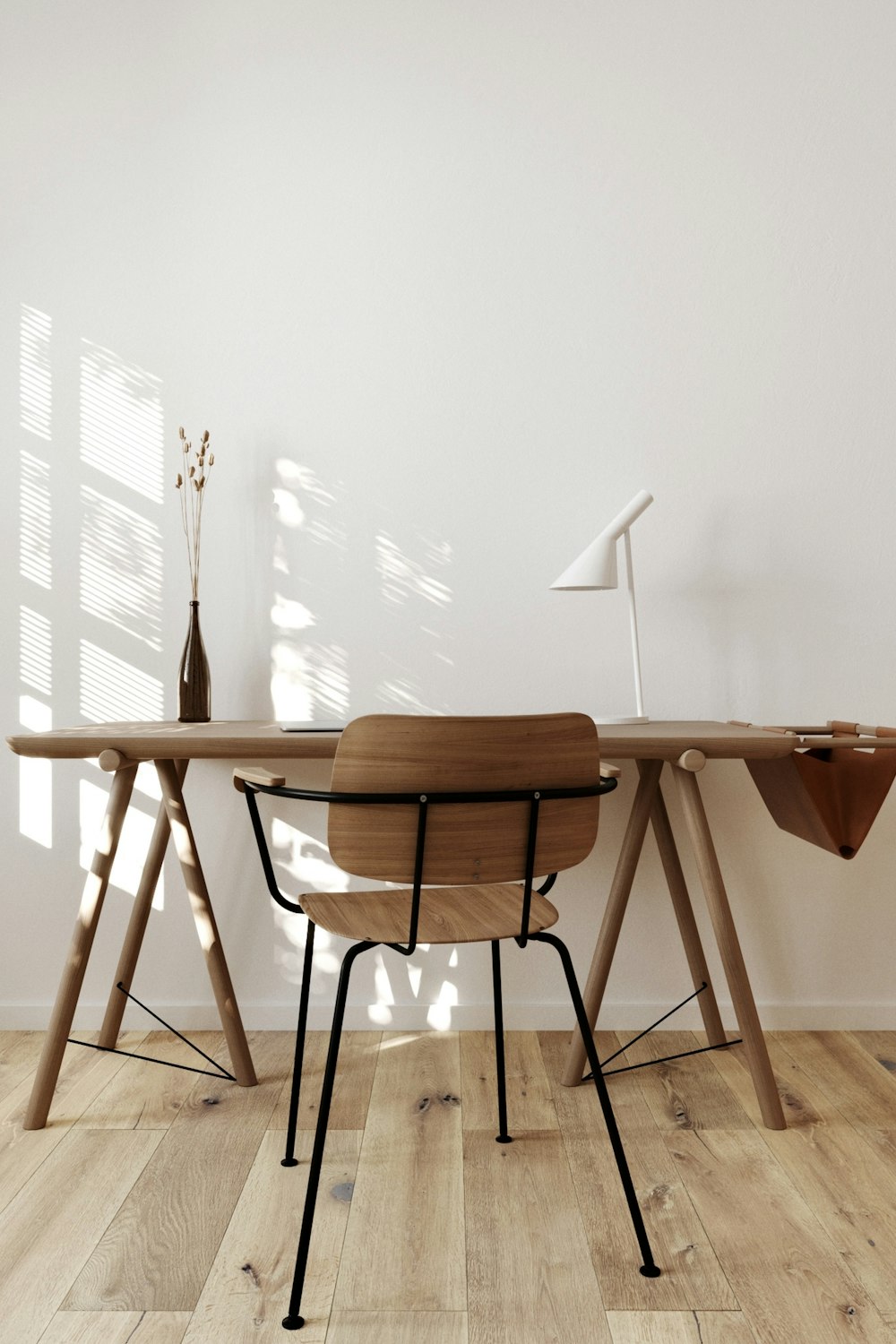
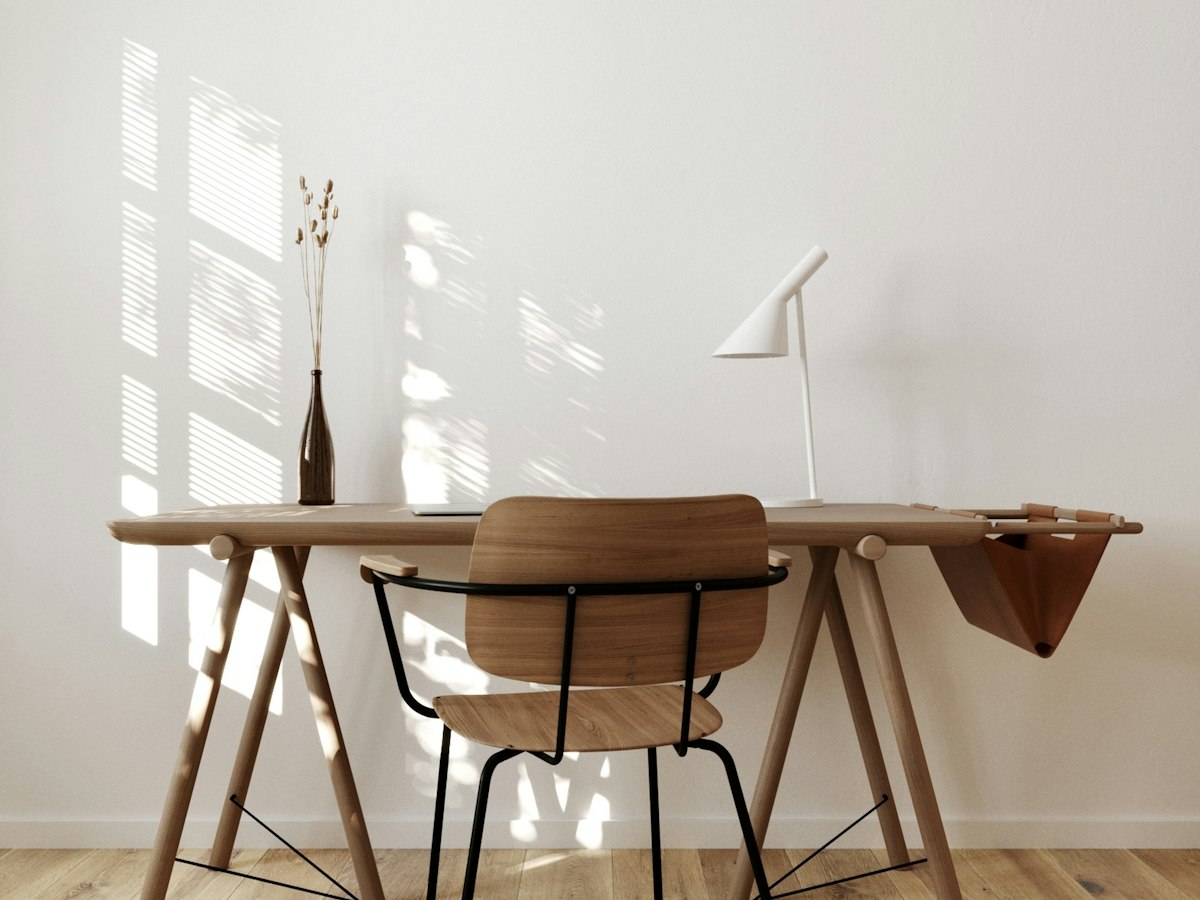
A desk corner in a living room has to do two jobs a real home office doesn’t — it has to actually work for a few hours of desk time, and it has to stop looking like a desk the rest of the evening. The four picks below keep the footprint shallow, skip anything that reads as “office furniture,” and stay under £300 for the whole corner including lighting and cable management.
Best desk: LAGKAPTEN / ADILS Desk
IKEA
LAGKAPTEN / ADILS Desk
A 60cm desk depth that clears a living room walkway, in an oak-effect finish that reads as furniture rather than an office fixture.
£45–65
Check price at IKEA (link coming soon)
60cm of depth is the number that matters here — deep enough for a laptop and a notebook side by side, shallow enough to push against a living room wall without narrowing the walkway the way a standard 70–80cm office desk would. The oak-effect tabletop is doing real work too: it reads as a side table or console from across the room rather than announcing “desk,” which matters once the laptop’s closed for the evening.
Best chair: Armless Task Chair, Fabric
Habitat
Armless Task Chair, Fabric
No armrests means it tucks fully under the desk when not in use, and the fabric covering doesn't read as an office chair across a living room.
£60–90
Check price at Argos (link coming soon)
Armrests are the main reason a desk chair won’t tuck fully under a desk, so dropping them gets the chair out of the way completely when you’re not working — genuinely useful in a room the chair has to disappear from in the evening. Fabric upholstery rather than mesh is doing the same visual job as the desk’s oak finish: it reads as a dining or accent chair, not office equipment. The trade-off against a proper ergonomic chair is lower back support over a full working day — fine for a few hours, not ideal for eight.
Best lighting: TERTIAL Work Lamp
IKEA
TERTIAL Work Lamp
A clamp-mount task lamp frees up desk surface entirely, unlike a lamp with its own base taking up a corner of a small desk.
£10–15
Check price at IKEA (link coming soon)
On a desk this shallow, a lamp with its own weighted base takes up floor space you’d rather use for a laptop or a mug. A clamp-mount lamp attaches to the desk edge instead and folds flat against the wall when you’re done for the day, which also suits the evening-disappearing-act the rest of this corner is built around.
Best for cable mess: Under-Desk Cable Management Tray
Duronic
Under-Desk Cable Management Tray
Keeps the extension lead and charging cables off the floor and out of sight, which matters more in a living room than a dedicated home office.
£15–25
Check price at Amazon UK (link coming soon)
A cable tray clamped under the desk catches the extension lead and charger bricks in one place, off the floor and out of sight from normal seated eye level across the room. It’s the least visually interesting item on this list and the one that does the most to stop the corner looking like a workstation once the laptop’s away.
What this guide doesn’t recommend
This guide doesn’t recommend gaming chairs, even the more restrained-looking ones — the high mesh backs, bold stitching and branded headrests are specifically designed to be a room’s focal point, which is the opposite of what a living-room desk corner needs. They’re also usually deeper and wider than a fabric task chair, eating more floor space than the desk they sit at.
Socket placement decides more than it should
Before buying anything, check where the nearest socket actually is relative to where you want the desk. A desk corner more than about a metre from a socket needs an extension lead running across visible floor, which undoes a lot of the tidy, considered look the rest of this list is aiming for. If the only viable socket is behind where the desk would sit, the under-desk cable tray above becomes closer to essential than optional — it’s the difference between cables hidden behind a desk leg and cables trailing across a rug where they’re both visible and a trip hazard.
Does the desk corner need its own rug?
Not required, but a small rug under the desk and chair — even a metre square — visually separates the work corner from the rest of the room’s flooring, doing some of the same “this is a zone” work a room divider would in a bigger space, without actually dividing the room. It also protects a wood or laminate floor from an office chair’s castors, which mark softer flooring over time more than most people expect. Skip it if the desk already sits on a rug that covers the wider seating area — a second, smaller rug immediately next to a bigger one usually looks like clutter rather than zoning.
How to choose
60cm desk depth is the number to hold to. Deeper eats into the room; shallower struggles to fit a laptop and notebook together.
Choose furniture that reads as furniture. Fabric over mesh, wood-effect over glossy plastic, no visible branding — the goal is a corner that looks intentional at 6pm with the laptop closed, not a desk that happens to be in a living room.
Add a monitor only if you need it daily. A laptop stand or a stack of books gets you most of the ergonomic benefit without committing permanent desk space to a screen.
Deal with cables before they become visible clutter. A cable tray and a couple of clips cost under £25 combined and do more for how “office” the corner feels than almost anything else on this list.
Frequently asked questions
- How deep does a desk need to be to work in a living room?
- 60cm depth is the practical minimum for a laptop plus a notebook or a mug without feeling cramped, and it's shallow enough to sit against a living room wall without eating into the walkway the way a 70–80cm office desk depth would. Anything shallower than 50cm struggles to fit a laptop and a keyboard and mouse at the same time.
- How do I stop a desk corner from taking over the room?
- Keep the desk against a wall rather than floating it, choose a chair that tucks fully under rather than one with arms that stick out, and resist adding a second monitor arm or a large desk organiser unless you genuinely use the desk daily — every addition makes the corner read more like an office and less like a living room.
- What chair actually looks right in a living room?
- Fabric or woven upholstery rather than mesh, a low profile without a tall ergonomic backrest, and no visible branding or gaming-chair styling. It won't be as supportive for eight hours of daily desk work as a proper ergonomic office chair, which is the trade-off for something that doesn't look out of place next to a sofa.
- Do I need a monitor, or is a laptop enough?
- For occasional use — a few hours a day, emails, browsing — a laptop on a laptop stand or a stack of books for eye-level height is enough, and skips the cost and desk space of a monitor and arm entirely. If you're doing focused work for most of the day, a monitor genuinely helps posture and eye strain, but it's a bigger commitment of both money and permanent desk space in a room that's also meant to feel like a living room.
- How do I manage cables without them being visible?
- An under-desk cable tray (see the pick above) catches the extension lead and charger cables in one place off the floor, and a couple of adhesive cable clips along the back desk leg route individual cables to it. It won't be fully invisible, but it stops cables trailing across the floor where they're both a trip hazard and the most visually 'office' element of the whole setup.